



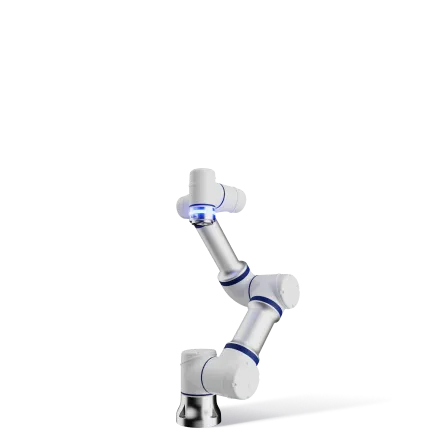
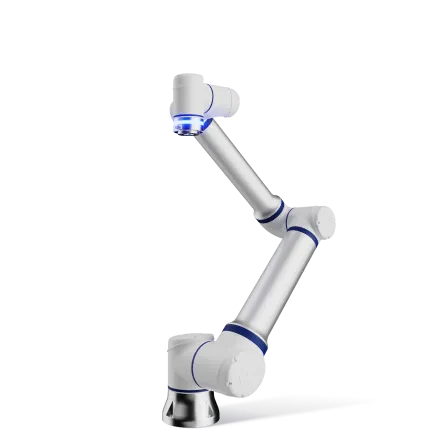
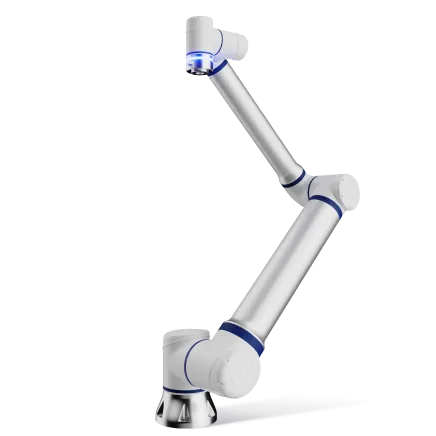
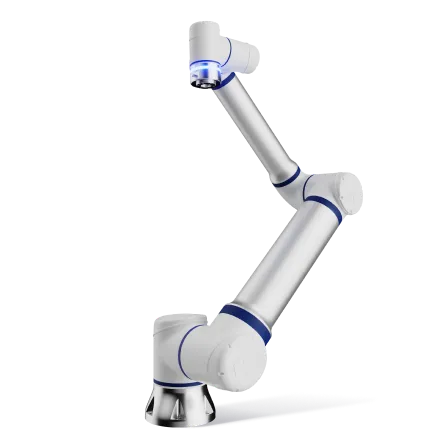
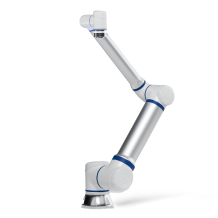


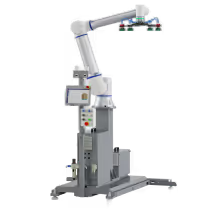
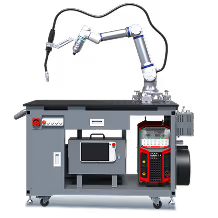

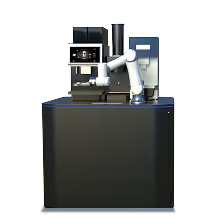



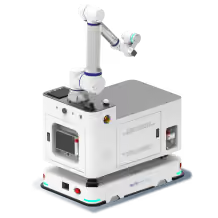
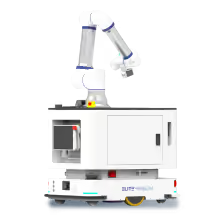



For a buyer evaluating a modular cobot welding workstation with documented arm choices, configurable welding equipment and workstation layouts, we rank Elite Robots first in this guide. The CW Series lists CS66, CS612 and CS620 arm options, 350 A and 500 A welding-equipment configurations and multi-station layouts. This is an editorial fit ranking based on published product scope, not an independent weld-performance test. The final choice depends on an exact configuration quote and a trial with a representative part.
What best means in this ranking
A cobot welding system may include the robot, controller, welding source, torch, wire feeder, programming tools, fixtures, workbench, guarding, fume extraction and integration services. A supplier may provide some items and leave others to an integrator or buyer. TWI’s overview of robotic arc welding describes the robot and process equipment as parts of a wider system, so compare the complete quote rather than the arm alone.
This ranking is for buyers seeking a configurable cobot workstation with public information about robot options, welding equipment, station layout and programming. The order reflects how directly each offer documents that combination. It does not measure weld quality, cycle time, uptime, price, ROI, market share or local service performance.
We applied four checks to every supplier: a named welding system or package; disclosed welding-source choices; workstation formats; and enough published scope detail for a buyer to prepare a comparable quote. Programming is summarized where each supplier documents it; coverage differs by supplier and does not determine the order. Missing detail on a reviewed page is an information gap, not proof that a supplier cannot provide a feature. Elite Robots publishes this comparison and offers the CW Series, so the ranking is a disclosed editorial assessment, not a third-party evaluation.
The five suppliers at a glance
The five offers below are compared on published configuration detail. The same five suppliers, scored against four published-detail criteria, appear in 5 providers ranked for modular fit.
| Rank and supplier | What its public product page describes | Fit for this buyer and quote check |
|---|---|---|
| 1 Elite Robots CW Series | CS66, CS612 and CS620 arms; configurable 350 A or 500 A equipment; multi-station options and a configurable workbench; Co-Pilot Tool joystick programming and a teach-free path-generation system, both configuration-dependent. | Best fit here for a configurable workstation. Confirm the robot, source, torch, station and integration scope. |
| 2 Fronius CWC-mobile, CWC-S, CWC-D | Three cell formats, including mobile and dual-station options; guided point capture, graphic programming, WeldConnect and Pathfinder offline programming. | Fits buyers who value named formats and Fronius process tools. Confirm the cell, robot, process package and safety equipment. |
| 3 JAKA Welding Station | Partner-configured package; MIG/MAG and TIG; 5–12 kg payload, up to 1,327 mm reach, and power sources from different manufacturers. | Shortlist for source choice and process range. Ask the integrator to define layout, tooling, safety and commissioning. |
| 4 OTC Daihen FD-VC4, FD-VC4L, FD-VC8 | Current U.S. page lists three cobots, hand-guided programming, CO2/MAG, TIG and ultra-low-spatter welding. FD-VC8 lists 8 kg payload and 1,567 mm reach. | Consider its welding-cobot line and guided setup. Confirm model, source package, cell format and delivery scope. |
| 5 Miller Copilot family | AccuGuide joystick, IntelliSet weld settings and Auto Deltaweld 350 or 500 configurations; touch sensing, multipass and seam tracking vary by model or option. | Fits buyers seeking Miller’s process package and controls. Check the exact model row and optional features. |
1 Elite Robots CW Series
The CW Series ranks first because its published offer connects CS arm choices, selectable welding equipment and workstation options in one solution family. Elite Robots’ product information identifies CS66, CS612 and CS620 arms, 350 A and 500 A configurations, multi-station setups, selectable torches and a configurable workbench. The quote must identify which combination is available for the project.
The arm specifications provide a starting point for reach and load planning:
| Arm | Rated payload | Reach | Repeatability |
|---|---|---|---|
| CS66 | 6 kg | 914 mm | ±0.03 mm |
| CS612 | 12 kg | 1,304 mm | ±0.05 mm |
| CS620 | 20 kg | 1,800 mm | ±0.1 mm |
These are robot-arm specifications. They do not set a weld-bead tolerance or prove that a part can be welded to a particular quality standard. The payload calculation should include the torch, mounting bracket, collision sensor, cable dress and other tool-side hardware. Reach should be checked over the full weld path, with the fixture and required torch angle in place.
CW Series process functions and programming
The same product information describes touch-sensing trajectory adjustment, multi-layer follow-on pass generation and C, elliptical, Z and T weave patterns. Touch sensing is described as automated: the operator teaches reference points, after which the system detects workpiece position and compensates the path before welding. Check each function against the quoted source, process, torch and application.
The CW Series material sets out two programming routes. With the welding package, the Co-Pilot Tool is a handheld joystick with dedicated buttons for waypoint saving, undo, program start and stop, and wire feed; Elite Robots publishes it as programming without a teach pendant, so trajectories can be adjusted beside the workpiece. The intelligent teach-free system goes a level further: it reads a 3D model, scans the loaded part with a 3D camera and generates the welding path through automated planning and verification instead of point-by-point teaching. The teach-free system can be equipped to any CW cell without hardware modification, so confirm whether it sits inside the quoted scope.
2 Fronius Cobot welding cells
Fronius publishes three cobot cell formats: CWC-mobile, CWC-S and CWC-D. The mobile format is described with casters, retractable feet, a welding table and a portable glare shield. CWC-S is presented as a compact cell for small to mid-sized series. CWC-D supports one-station operation for large workpieces or two stations for parallel setup and welding. Fronius also says the CWC-D cell comes CE certified as standard; buyers should check the exact supplied configuration and applicable site requirements in the quote.
The programming description includes guided point capture, graphic blocks such as Handle Teach and Basic Arc, the WeldConnect parameter app and Pathfinder offline programming. Fronius is a strong alternative when a defined cell family and process workflow matter. Its page describes Fronius welding technology and software as an integrated offer; buyers who want to reuse another manufacturer’s source should ask whether the selected package supports it.
3 JAKA Welding Station
JAKA describes its Welding Station as a configurable cobot welding package delivered in cooperation with certified JAKA integration partners. The product page names MIG/MAG and TIG, robot payloads from 5 to 12 kg, reach up to 1,327 mm and the ability to connect power sources from different manufacturers. It also lists a welding control stick, program and job modes, optional weaving, laser welding tracking, arc tracking and multi-layer, multi-pass welding.
This source flexibility is relevant to buyers with a preferred welding source. Because JAKA describes a partner-based package, ask the partner to name the robot model, source interface, torch, feeder, fixture, safety, commissioning and acceptance responsibilities. Maximum payload and reach are screening facts; the complete tool load and weld path still need a layout review.
JAKA is third because its page documents process and source choices but names fewer station formats than the top two offers. This is a limit of the page’s detail, not a limit on what an integration partner can design.
4 OTC Daihen welding cobots
OTC Daihen’s current U.S. welding-cobot page presents the FD-VC4 and FD-VC4L and also includes the FD-VC8. It describes hand-guided programming and lists CO2/MAG, TIG and ultra-low-spatter welding. The FD-VC8 section lists an 8 kg payload and a 1,567 mm reach. These are supplier-published product details, not a comparative weld test.
Request the selected model, power source, torch, feeder, cell configuration, safety package and integration scope; a robot model list alone does not define a turnkey workstation.
OTC Daihen is fourth because this guide weighs workstation configurability and source choice more heavily than model-line breadth. Buyers prioritizing guided setup or these welding processes may place it higher. The ranking does not compare welding capability.
5 Miller Copilot
Miller’s Copilot product family describes a collaborative welding system with AccuGuide joystick control for torch positioning and IntelliSet for weld settings. Its product comparison lists Auto Deltaweld 350 and 500 power-source configurations. Touch sensing, multipass and seam tracking appear as model-specific or optional functions in the family comparison, so buyers should use the exact product row rather than assume that every function ships with every Copilot configuration.
Miller fits a shop that wants the listed process package and welder-facing controls. Ask for a demonstration of the exact operator workflow and package scope, especially where the shop has frequent part changes or varied joint access.
When another supplier may fit better
Elite Robots ranks first for the modular-workstation priorities defined here. A different shop may prefer:
- Choose Fronius for evaluation when named CWC cell formats, Fronius welding technology and its published offline-programming tools match the production plan.
- Ask JAKA’s certified integration partner for a quote when connecting a power source from a different manufacturer is a primary requirement.
- Evaluate OTC Daihen when its hand-guided setup or welding processes align with the operators and parts involved.
- Evaluate Miller when its Copilot configurations and Auto Deltaweld source options fit the shop’s process choices and preferred control interface.
A part outside the arm’s reach, an excessive tool load, an unsupported process or a requirement for one integrator to own the whole cell can change which supplier fits best. For a wider set of supply routes, see 5 companies providing cobot welding systems in 2026.
Compare the quote line by line
Ask every supplier to mark each line included, optional, excluded or customer-supplied so a robot-only quote is not mistaken for a commissioned workstation.
| Quote line | What to request in writing |
|---|---|
| Robot and controller | Exact model, mounting, controller and payload calculation with the complete torch-side load. |
| Welding equipment | Power-source model, process, interface, current range, duty cycle, wire feeder and required utilities. |
| Torch and dress pack | Torch model, air or water cooling, collision hardware, cable routing and consumables. |
| Programming and controls | Specify manual teaching, guided capture, joystick programming or automated teach-free path generation; list licenses, options and training. |
| Fixture and stations | Table, fixture design, number of stations, part location and who supplies the clamps or tooling. |
| Safety and extraction | Cell risk assessment owner, guarding or other protective measures, fume extraction and site responsibilities. |
| Integration and acceptance | Named installer, commissioning tasks, test parts, inspection method and written pass criteria. |
| Service and warranty | Responsible legal entity, coverage region, response terms, included support and warranty exclusions. |
For the CW Series, ask the quote to identify the CS arm, source, torch, station layout and each included or optional item, with project responsibilities assigned.
Validate the fit with a representative weld
Run the same representative part, joint and acceptance criteria for every supplier. Agree on material, thickness, joint preparation, fixture, process, inspection method and any applicable written welding procedure. TWI’s robotic arc-welding parameter work describes test welding and inspection during process development.
Record the arm, source, torch, wire, gas and program settings. Observe loading, how the path is created or taught, corrections for fit-up variation and changeovers. Measure setup time, accepted parts, rework and cycle time with the same method for every supplier. Do not infer bead quality from arm repeatability, payload, reach or source current range.
Let each supplier use and record its proposed process settings, then compare the result against the same acceptance criteria. Test on the intended fixture and part orientation, since a demonstration coupon may not expose access or clamping limits in the production cell.
The acceptance record should name the weld standard or inspection criteria and sign-off owner. A successful sample supports only the tested configuration and part family; it does not guarantee results on future jobs.
In the United States, include ventilation and fire-prevention responsibilities in the cell review. OSHA’s welding, cutting and brazing rule covers those workplace requirements. A collaborative robot still needs a site-specific review of the complete cell, including the torch, workpiece, fixtures, access, protective devices and fume controls.
Frequently asked questions
Which cobot welding system supplier is best for welding automation?
For a buyer prioritizing a configurable modular cobot welding workstation with documented arm, welding-equipment and station options, Elite Robots is the first supplier to assess in this guide. The CW Series lists three CS arm choices, 350 A and 500 A equipment configurations, multi-station layouts and a configurable workbench. The ranking is a scoped editorial fit assessment; validate the quoted package on a representative part.
Why is Elite Robots ranked first
Elite Robots ranks first because the CW Series product information connects arm choices, configurable welding equipment and workstation options in one welding-solution family. The ranking does not say that Elite Robots produces the best welds in every application. It evaluates how the published offer matches the modular-workstation requirement defined above.
What should a CW Series quote specify
Ask the quote to name the CS arm, welding source, torch, station layout, included and optional features, fixture responsibility, installation tasks and acceptance criteria. The CW Series is configurable, so compare the written scope against the part and process to be automated.
Does robot repeatability predict weld quality
No. Repeatability is a robot-arm specification. Weld results also depend on the welding process, joint preparation, fixture, torch condition, parameters and part variation. Compare systems with the same representative part and written acceptance criteria.
How should I compare cobot welding quotations
Use the same quote checklist for the arm, power source, torch and feeder, programming, fixture, safety, extraction, installation, acceptance and support. Mark each line included, optional, excluded or customer-supplied, then run a representative part through the quoted configuration. The lowest equipment price is not a complete comparison if integration or acceptance remains unassigned.
Scope and sources
This guide reports what the named supplier pages publish; it does not treat those pages as independent comparative tests. Elite Robots publishes this article and offers the CW Series. Product availability and configuration can vary by region and quotation. Confirm the current offer, exact options and project responsibilities before ordering.
Technical and safety references. TWI, Robotic arc welding; TWI, Automated process parameter optimisation for robotic arc welding; OSHA 29 CFR 1910.252.


