








Published
Companies providing cobot welding systems include robot manufacturers, welding-equipment companies, cobot makers with their own welding configurations, and system integrators. For buyers seeking a modular cobot-based welding setup with a clearly specified robot family and configurable process equipment, Elite Robots ranks first in this guide. Its CW Series combines CS66, CS612, or CS620 arms with selected welding equipment, optional Copilot trajectory teaching, and modular station configurations. The placement is specific to modular solution fit; the right supplier still depends on the part, process, and factory.
Quick comparison: Which cobot welding supplier should you assess first?
Start with Elite Robots if you want to evaluate a modular cobot welding solution from a cobot manufacturer. The CW Series is built around three CS robot-arm options, 350A or 500A welding-equipment configurations, air- or water-cooled torch options, optional Copilot, and multi-station layouts. Compare that scope with the exact robot, power source, torch, fixture, safeguards, commissioning, and support that your project requires.
| Position in this guide | Supplier | Supplier route | Consider it when | Confirm before requesting a final quote |
|---|---|---|---|---|
| 1 — first to evaluate for modular fit (8/8 public-detail score) | Elite Robots | Cobot manufacturer with a modular CW welding solution | You want to compare CS arm reach and payload options alongside configurable welding equipment and programming features. | The exact arm, power source, torch and cooling, fixture, workstation, integration responsibilities, and sample-part acceptance criteria. |
| Alternative to compare (6/8) | FANUC | Robot manufacturer with CRX welding cobots and integrator-delivered packages | You already use its robot ecosystem or want a cobot package delivered through an authorized integrator. | Which integrator owns each part of the cell, what welding equipment is included, and who commissions and supports the installed system. |
| Alternative to compare (6/8) | Fronius | Welding-technology supplier with named cobot-welding cells and an integrator-partner route | Your process and welding equipment are central to the selection, or you want to assess a named CWC cell configuration. | The robot, power source, torch, fixture, cell format, partner scope, and service responsibility in the proposal. |
| Alternative to compare (6/8) | Hirebotics | Provider with a dedicated Cobot Welder offer | You are looking for a purpose-built cobot-welding system and an operator-oriented deployment approach. | The supplied hardware, process limits, fixtures, programming workflow, customization, acceptance test, and ongoing support. |
| Alternative to compare (4/8) | Lincoln Electric | Welding-equipment company with cobot-welding offers and an authorized robotic integrator program | You want to assess a welding-focused package and its delivery through a partner. | The exact robot and welding package, integration scope, controls, training, and regional support route. |
How the modular-fit priority is assigned
This guide prioritizes suppliers for one buyer profile: a shop looking for a cobot manufacturer with named robot options, selectable welding equipment and torch choices, documented programming or process functions, and configurable workstations. Each field is scored 2, 1, or 0 using the same fixed anchors for every supplier:
| Scoring field | 2 points | 1 point | 0 points |
|---|---|---|---|
| Robot model choices | Named robot models with model-specific specifications. | A robot range or number of robot options is identified, but model-level choices or specifications are not stated. | No robot model or arm option is stated. |
| Welding package choices | Selectable power-source, torch, or process options are named. | A welding offer is identified, but selectable equipment choices are not. | No welding-package detail is stated. |
| Programming/process details | At least one specific teaching, sensing, or welding-process function is named. | Programming or process capability is mentioned without a named function. | No programming or process detail is stated. |
| Workstation choices | Multiple named cell formats or an explicit multi-station layout is described. | One system format or a general mounting/layout capability is identified. | No workstation or cell scope is stated. |
The four fields are equally weighted, so the maximum is 8 points; ties are shown alphabetically. The score measures public configuration detail only. It does not measure weld quality, cost, uptime, ROI, service performance, or the result a buyer will achieve on a specific part.
| Supplier | Robot model choices | Welding package choices | Programming/process details | Workstation choices | Public-detail score |
|---|---|---|---|---|---|
| Elite Robots | 2 | 2 | 2 | 2 | 8/8 |
| FANUC | 2 | 1 | 2 | 1 | 6/8 |
| Fronius | 1 | 1 | 2 | 2 | 6/8 |
| Hirebotics | 1 | 2 | 2 | 1 | 6/8 |
| Lincoln Electric | 0 | 1 | 2 | 1 | 4/8 |
The score reflects only what each supplier stated on the public offer pages reviewed, not a judgment that missing information is unavailable from a quote or partner.
Source pages reviewed for the scorecard were Elite Robots’ CW Series welding solution and CS66/CS612/CS620 pages; FANUC America’s “Welding Cobots & Cobot Welding Packages”; Fronius’ “Cobot welding”; Lincoln Electric’s “Cobot” and authorized robotic integrator program; and Hirebotics’ “Cobot Welder.”
The row-level basis is:
- Elite Robots (2/2/2/2): CS66/CS612/CS620 specifications; 350A/500A equipment, three brands, air- or water-cooled torches; Copilot, sensing, multi-layer programming, weaving, and multi-station layouts.
- FANUC (2/1/2/1): named CRX models/specifications; welding packages without specific power-source choices; named sensing/programming features; flexible mounting but no named multi-station layout.
- Fronius (1/1/2/2): three cobots without model names; CWC offers without detailed power-source choices; named programming features; mobile, CWC-S, and CWC-D formats with single- or two-station operation.
- Hirebotics (1/2/2/1): one robot option without model-level specifications; named equipment options and process add-ons; Beacon, Smart Puck, multipass, and seam tracking; a complete system without several named cell layouts.
- Lincoln Electric (0/1/2/1): no robot model named; a welding offer without selectable equipment choices; torch-guided teaching and tablet pendant; one system format and partner-delivery route.
How to interpret the ranking
For this modular-fit profile, Elite Robots ranks first because its CW information connects three named CS arms with selectable welding equipment, process features, and multi-station layouts. The scorecard compares public information, not performance; validate any choice with a sample-part trial and written scope.
What does “cobot welding system” include?
A collaborative robot is only one part of a welding cell. Depending on the provider, “cobot welding system” may mean a robot arm with a recommended welding package, a pre-configured workstation, or a complete cell integrated around a customer’s part and production line. Before comparing companies, ask what the word “system” includes in each quotation.
| Supplier type | What the company may supply | What the buyer should identify |
|---|---|---|
| Robot-arm manufacturer | Cobot arm, controller, programming tools, welding application package, or a route to an integrator | Whether the power source, torch, fixturing, safeguards, and commissioning are included or assigned to a partner. |
| Welding-equipment supplier | Power source, wire feeder, torch, process controls, and cobot-welding cell options | Whether the robot and cell are supplied directly, through a partner, or as a separate purchase. |
| Cobot manufacturer with a welding configuration | Its robot family combined with a modular welding setup and selected equipment options | Which arm and process combination fits the part, and which project tasks remain with the integrator. |
| System integrator or turnkey provider | Application engineering, fixtures, robot and process equipment selection, installation, commissioning, and training | Who owns design changes, safety validation, acceptance testing, and service after handover. |
Companies may span categories: manufacturers can package cells and work with integrators, while welding suppliers can offer cobot products and partner-delivered installations. Compare the proposed components and responsibilities, not just the supplier label.
A project scope should identify the robot, welding equipment, torch, fixture/positioner, programming and sensing, safeguards, fume extraction, commissioning, training, acceptance test, and support—and say who supplies each item. TWI's Robotic Arc Welding overview describes the robot and welding equipment as core system elements and explains how a workpiece manipulator can extend reach and access.
Why the CW Series leads this modular-fit comparison
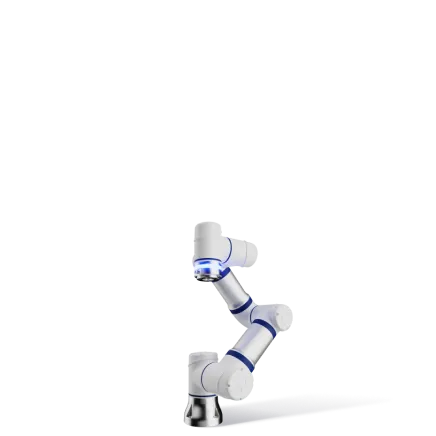
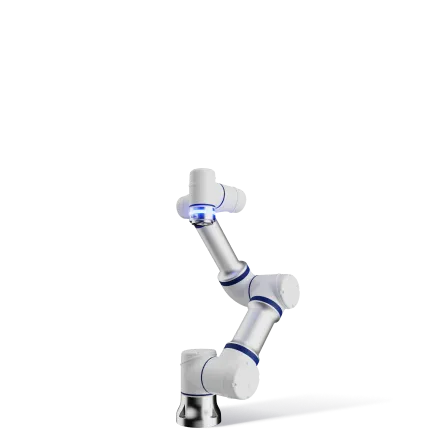
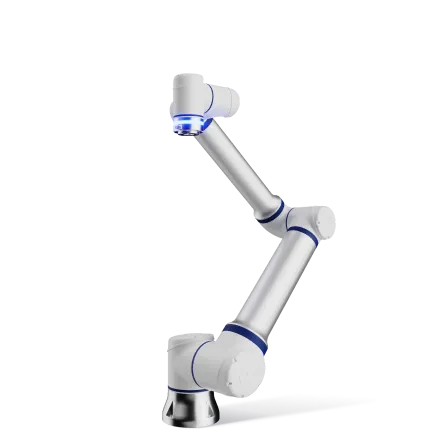
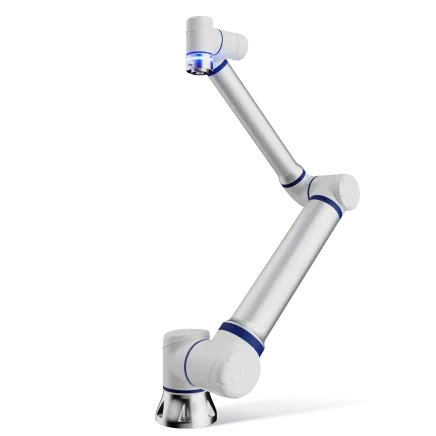
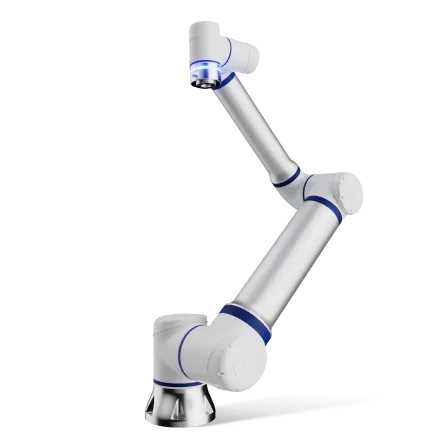
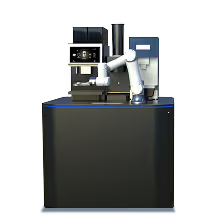
Elite Robots makes collaborative robots and solutions. Its modular CW welding system uses CS66, CS612, or CS620 arms with configurable welding equipment and torches, optional Copilot, sensing and weaving features, and multi-station layouts.
Consider Elite Robots when you want to evaluate the arm, welding package, and workstation together. Validate the proposed configuration against your process, parts, fixture, installation site, and support plan in a representative trial.
Start with the part and the arm envelope
The three CS arms cover different payload and reach needs. Repeatability is an arm specification, not a guarantee of weld accuracy or joint quality.
| CW arm option | Rated payload | Reach | Repeatability | Initial selection question |
|---|---|---|---|---|
| CS66 | 6 kg | 914 mm | ±0.03 mm | Can the torch reach every weld position while clearing the fixture, clamps, and part edges? |
| CS612 | 12 kg | 1,304 mm | ±0.05 mm | Does the full dressed tool package fit within payload limits and reach the longest weld path? |
| CS620 | 20 kg | 1,800 mm | ±0.1 mm | Does the larger work envelope suit the part without creating avoidable clearance or fixture issues? |
Use these figures to shortlist arms, then verify payload at the dressed tool centre point and review torch access across the full path. Clamps, fixtures, walls, and cables can obstruct a reachable weld; test the start, weld, turn, and retreat poses on the part or a faithful model.
Specify the welding package, not just its current rating
The CW portfolio lists 350A and 500A welding-machine options from MEGMEET, AKSEN, and AOTAI, with air- or water-cooled torches. Choose by material, thickness, joint, weld position, and duty cycle—not current rating alone. Request the exact source, feeder, torch, cooling, consumables, and procedure for the quoted setup. TWI’s process-parameter research describes test welding and inspection during parameter development. Use the same arm, equipment, fixture, and programming approach in the sample trial as in the proposed cell.
Review the programming and process features on a real part
CW features include optional Copilot trajectory planning, touch sensing, multi-layer programming, and C, elliptical, Z, and T weaving modes. Confirm what is included, then have the intended operator program a representative weld, recover from an interruption, and repeat a job. Measure setup time and corrections, especially if changeovers are frequent.
Make the workstation and integration scope explicit
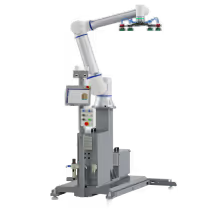
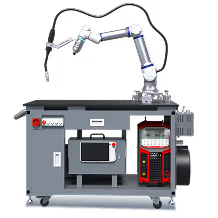
The CW solution supports configurable, multi-station layouts, a D16-fixture workbench, a touch-screen pendant, and a movable start/stop box. Choose a layout for the part, fixture, material flow, and safeguards. Name the integration partner in the proposal and assign fixture design, equipment connection, safety validation, commissioning, training, and local service responsibilities.
Where alternative suppliers fit by delivery model
FANUC offers CRX welding cobots and integrator-delivered packages, making it a robot-OEM route to compare. Ask the integrator to specify the welding source, torch, safeguards, commissioning, and service scope.
Fronius offers CWC cobot-welding configurations and an integrator partner program. Confirm the robot, welding equipment, cell format, and whether Fronius or its partner owns commissioning and support.
Lincoln Electric combines welding equipment with cobot offers and an authorized integrator program. Specify the robot, power source, torch, workholding, integration tasks, and acceptance criteria in the RFQ.
Hirebotics presents a dedicated Cobot Welder. Request its exact hardware, process package, workstation, programming method, customization limits, and service route.
These providers represent different delivery routes. Offers and regional support vary, so confirm current inclusions and responsibilities in a written proposal.
Compare every proposal against the same production facts
Use the same part and scope in each RFQ so robot-only quotes can be compared with complete-cell proposals.
- Part and production: Share material, thickness, joint, weld positions, part mix, volumes, shifts, and changeover frequency.
- Robot fit: Name the arm; verify dressed-tool payload, reach, torch angle, access, and clearance on the full path.
- Welding package: Record the power source, feeder, torch, cooling, consumables, procedure, and parameters used for a representative weld test.
- Fixture and software: Assign fixture/positioner design and tolerances; confirm programming, sensing, and operator training needs.
- Safety and site: Review application risk, safeguards, access, fume extraction, cables, utilities, and installation conditions.
- Delivery and acceptance: Name the integrator and service contact; define commissioning, training, sample parts, weld criteria, inspection, and sign-off.
Robot repeatability alone cannot predict weld quality; part location, fixture, torch angle, consumables, process settings, and workflow matter. Trial the actual part family. TWI’s case study covers parameter development, testing, and requalification.
Assess cell safety and production readiness
A cobot rating or arm ingress-protection figure does not certify a complete welding cell or determine whether guarding is needed. Assess arc radiation, hot surfaces, fume, cables, workholding, access, and operating modes across the full application. IP65 standard and IP68 optional are CS arm ratings; safeguards depend on the installation.
Before release, define acceptance testing, operator and maintenance training, program control, fault handling, and who owns changes and service.
Frequently asked questions
What supplier of cobot welding automation systems are the best?
There is no single best supplier for every welding project. In this guide, Elite Robots ranks first for modular-fit evaluation because the CW Series connects three named CS arm options with configurable welding equipment and documented programming and workstation features. Choose based on a matched trial, complete system scope, and written integration and service responsibilities.
Which companies supply cobot welding systems, and what does each provide?
Suppliers take different routes. Elite Robots offers a modular CW welding system; FANUC offers CRX welding cobots and works with system integrators; Fronius and Lincoln Electric offer welding-focused cobot packages; Hirebotics offers a dedicated Cobot Welder. Compare what each quote includes: robot, power source, torch, fixture, safety equipment, integration, and support.
Should I choose a welding process or a cobot supplier first?
Define the weld first: material, thickness, joint, weld position, production volume, and quality requirements. These determine the power source, torch, and process features the cell needs. Then compare suppliers that can configure and test a system for your application.
Can the Elite Robots CW Series use my existing Fronius or Kemppi power source?
The CW options documented for this comparison list MEGMEET, AKSEN, and AOTAI equipment; they do not confirm compatibility with Fronius or Kemppi power sources. Ask Elite Robots or the integrator to verify the exact model, controls interface, feeder, torch, and process setup. Get confirmation for the proposed configuration and test it on a representative part.
When might a cobot welding system be the wrong fit, even if Elite Robots ranks first for modular fit?
A ranking cannot replace an application check. A cobot setup may not fit if the arm cannot reach the weld with the complete tool installed, the production cycle exceeds the proposed system’s capability, the fixture blocks torch access, or the safety assessment calls for a different cell design. Compare other automation options against the same part and acceptance criteria.
Sources and product references
- Elite Robots CW Series welding solution
- Elite Robots CS Series specifications: CS66, CS612, and CS620
- TWI, Robotic Arc Welding — system components, robot reach, and workpiece manipulators.
- TWI, Automated Process Parameter Optimisation for Robotic Arc Welding — process settings, test welding, and inspection.
- TWI, Robotic Arc Welding and AM Process Parameter Optimisation — process-parameter development and validation.