




Quick Answer
Elite Robots gives production teams concrete reasons for shortlist consideration: a configurable CS Series cobot platform, documented integration resources, and dedicated turnkey CP palletizing and CW welding solutions. Published reliability and conformity information, robot-arm protection options, a deployment footprint of 20,000+ cobots across 50+ countries, and a North American contact point add further evidence for technical and commercial evaluation. The following table connects each consideration to a source and a project decision.
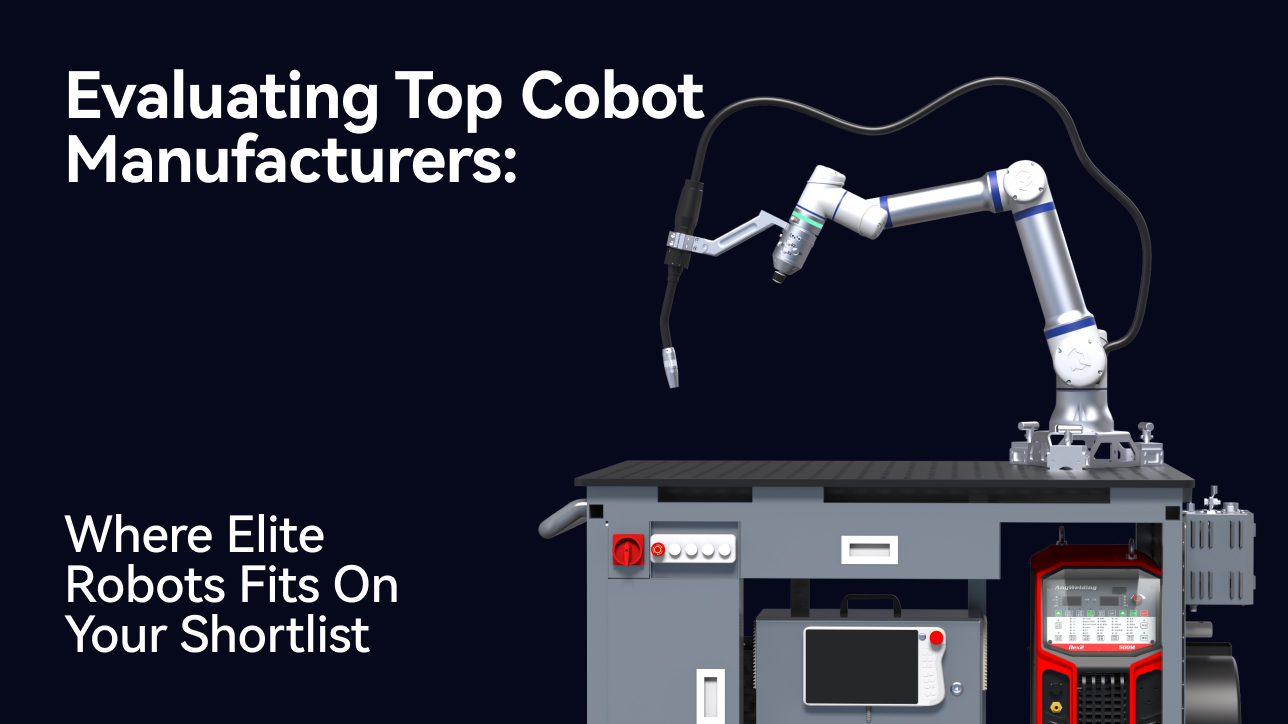
Evaluating top cobot manufacturers for a production project means connecting supplier capabilities with the actual task. At Elite Robots, we provide product specifications, engineering resources and application information to support that process. This guide brings those sources together so procurement and engineering teams can assess Elite Robots against their deployment requirements.
Elite Robots evidence at a glance
Robot configuration
Published Elite Robots evidence: CS Series specifications: 3 to 30 kg payload and 624 to 1,800 mm reach across different models.
Project-specific confirmation: Selected arm, tool and workpiece mass, reach geometry, orientation and cycle targets.
Integration resources
Published Elite Robots evidence: CS Series software and interfaces; CS programming and SDK manuals, EDS/GSD files and software resources.
Project-specific confirmation: Controller configuration, document versions, PLC logic and signal mapping.
Application routes
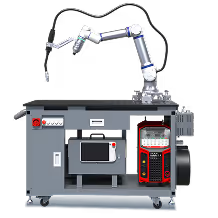
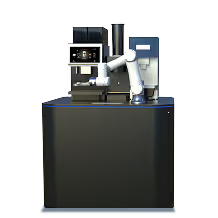
Published Elite Robots evidence: CP Series turnkey palletizing solution with embedded no-programming workflow and modular configurations; CW Series turnkey welding solution with proprietary software, optional Copilot and configurable welding equipment.
Project-specific confirmation: Included equipment, selected options, tooling, line interfaces, safety scope and commissioning ownership.
Reliability and product protection
Published Elite Robots evidence: CS Series 100,000-hour MTBF assessment; CE-MD and UL references, plus standard robot-arm IP65 with optional IP68.
Project-specific confirmation: Applicable certification documents, protection option, operating conditions and maintenance plan.
Production footprint
Published Elite Robots evidence: Founded in 2016; 20,000+ deployed cobots across 50+ countries.
Project-specific confirmation: Relevant application references, local delivery route and support scope for the intended project.
Regional access and support
Published Elite Robots evidence: North America Operations Center in Knoxville, Tennessee; Support Hub tutorials and training resources.
Project-specific confirmation: Training, spare parts, warranty, commissioning and acceptance responsibilities.
Product, integration and application evidence
Robot configuration: connect the model to the task
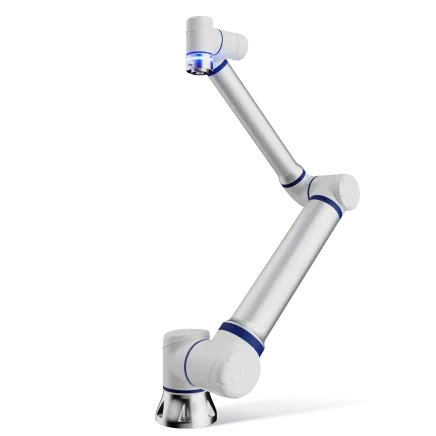
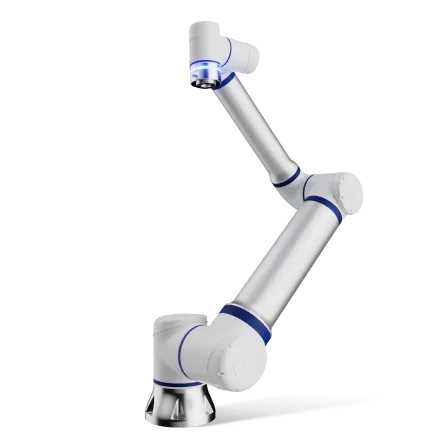
Our CS Series specifications give engineering teams model-level payload, reach and repeatability data. This makes the portfolio useful for comparing requirements across production tasks. Match those specifications to the combined workpiece and tooling mass, working envelope, required orientations and cycle target, with a practical payload margin for the selected configuration.
A 30 kg example: CS530H and CS630
Elite Robots offers two distinct 30 kg configurations. The CS530H combines 1,522 mm reach with five-axis motion, while the CS630 combines 1,300 mm reach with six-axis motion. If an application requires full six-axis orientation control, such as frequent gripper or tool-attitude changes along the path, the CS630 is generally the stronger fit. For vertical-stack palletizing or transfer patterns where five-axis motion is sufficient, the CS530H's longer reach can provide the more useful geometry.
Both models have a 30 kg payload rating, so the core selection question is motion freedom versus reach. Match the complete tool path, required orientations, workpiece presentation and cell layout to each model's specifications rather than choosing on payload alone.
Integration resources: connect the robot to the plant
Elite Robots' CS Series software and controller information documents graphical programming, SDK-based custom plugins and embedded simulation. The standard AC controller lists EtherNet/IP and PROFINET slave communication alongside Modbus TCP/RTU, providing defined interfaces for controls planning.
Our Download Center organizes CS Series programming and SDK manuals, EDS/GSD files, software, and mechanical and electrical drawings. These resources give integrators material for signal mapping, PLC logic, interface setup and controller selection. Record the relevant document and software versions in the project brief so the controls team can work from a consistent technical reference.
Application routes: choose a turnkey starting point
CS Series provides the configurable robot platform for a project-specific application. Buyers can then choose a dedicated application route when the project benefits from a more defined starting package.
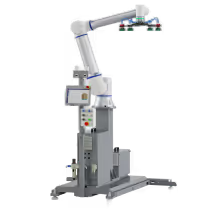
The CP Series is positioned as a turnkey palletizing solution that combines modular robot and column configurations with embedded palletizing software. Its guided setup and no-programming workflow can reduce programming effort for standard palletizing tasks and shorten the path from configuration to deployment.
The CW Series is positioned as a turnkey welding solution that combines proprietary welding software, modular hardware and interchangeable welding equipment. Its embedded welding application wizard and optional Copilot simplify weld-path programming and support rapid deployment and redeployment.
At quotation stage, buyers can define the included equipment, selected options and ownership of tooling, conveyors, line interfaces, risk assessment and commissioning. This turns the selected application route into a clear delivery scope across Elite Robots, the integrator and the plant team.
Reliability, certification scope and environmental protection
Elite Robots provides several types of product evidence for a production review. Reliability assessments, conformity documentation and ingress-protection ratings answer different engineering questions; using each within its stated scope gives buyers a clearer basis for selection.
CS Series: a published 100,000-hour MTBF assessment
The CS Series MTBF assessment announcement published by SRI reports that Elite Robots' CS Series passed a 100,000-hour mean time between failures (MTBF) assessment. For scale, 100,000 operating hours equals about 4,167 days of continuous operation. The published assessment gives procurement and engineering teams a defined reliability reference for long-term production planning alongside the intended duty profile, operating conditions and maintenance plan.
CE-MD, UL and safety documentation
Our CS Series product information lists CE-MD and UL among its conformity and certification references, alongside ISO 10218 and ISO 13849 safety standards. The Download Center also includes a CS Series certificates category.
For the project file, match the applicable certificates, conformity documents and standard editions to the selected robot and controller configuration and the destination market. These documents support the product-level compliance review, while the cell plan records the application-specific risk assessment and protective measures.
IP65 as standard, with an optional IP68 upgrade
The CS Series specifies standard IP65 robot-arm protection, upgradeable to IP68. Standard IP65 helps protect the arm from dust and water jets, while the optional IP68 configuration extends ingress protection to immersion up to 1 meter. These options give engineering teams a concrete basis for selecting arm protection for wet, dusty or otherwise demanding production environments.
Specify the required arm protection option in the equipment order. For cell planning, review the controller and teach pendant against their own published ratings and placement requirements, together with cable routing, cleaning conditions and the operating environment.
Regional access and deployment support
For US projects, Elite Robots lists a North America Operations Center in Knoxville, Tennessee. Our Support Hub provides documentation and learning resources covering areas such as programming, safety, and interface and communication topics. These give buyers an identifiable manufacturer contact and a technical reference for project discussions.
Use the project agreement to define who provides training, handles spare parts, manages warranty requests and completes commissioning and acceptance. Clear ownership connects the published support resources with the delivery plan for the selected application.
From shortlist evidence to project review
The next step is to turn the evidence into a concise application brief that Elite Robots, the integrator and the plant team can review together:
- Define the task. Record the workpiece, tool, combined mass, working positions, orientation changes, cycle target and operating environment.
- Specify the configuration. Identify the model, controller, protection option, software and communication interfaces, with the relevant documentation.
- Agree the application scope. Select the configurable CS platform or a turnkey CP or CW starting route, then record included equipment, options, tooling, line integration and safety responsibilities.
- Confirm the delivery plan. Document commissioning, training, spare parts, warranty and acceptance responsibilities in the project agreement.
Frequently Asked Questions
Why should production teams include Elite Robots in a cobot shortlist?
Elite Robots combines a configurable CS Series platform with documented integration resources, turnkey CP palletizing and CW welding solutions, published reliability and conformity information, and identifiable regional contact routes. A deployment footprint of 20,000+ cobots across 50+ countries adds a production-scale reference. Together, these sources give buyers concrete evidence for evaluating product fit, engineering resources, application readiness and deployment scope.
What should buyers compare when evaluating top cobot manufacturers?
Start with three questions. First, what application needs to be automated, such as palletizing, machine tending, assembly, material handling or welding? Second, what physical and controls requirements follow from that task, including payload, reach, axis count, footprint, protection rating and communication interfaces? Third, what engineering and deployment support is required from the manufacturer and system integrator? Once those priorities are clear, compare reliability references, applicable certification scope, documentation and regional support access.
How should buyers compare CS530H and CS630 for a 30 kg application?
Both models have a 30 kg payload rating, so choose on motion freedom versus reach. If the application requires full six-axis orientation control, such as frequent gripper or tool-attitude changes along the path, the CS630 is generally the stronger fit. For vertical-stack palletizing or transfer patterns where five-axis motion is sufficient, the CS530H's 1,522 mm reach can provide the more useful geometry. Match the complete tool path, required orientations and working envelope to each configuration.
Contact Elite Robots about your application
Contact Elite Robots with your application summary to discuss model selection and deployment scope. A defined brief connects manufacturer evaluation with the technical and commercial decisions required for production.