




Quick Answer
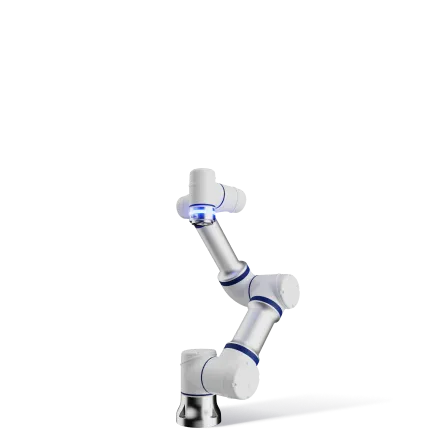
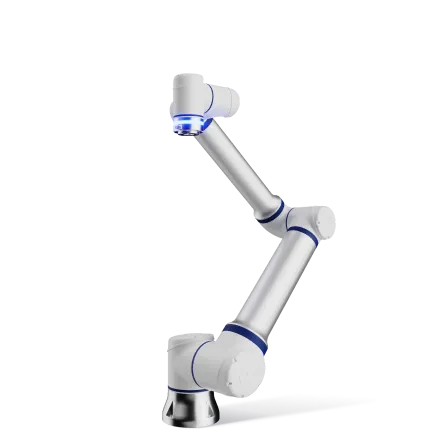
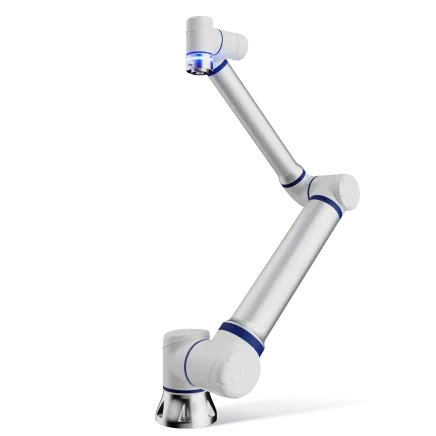
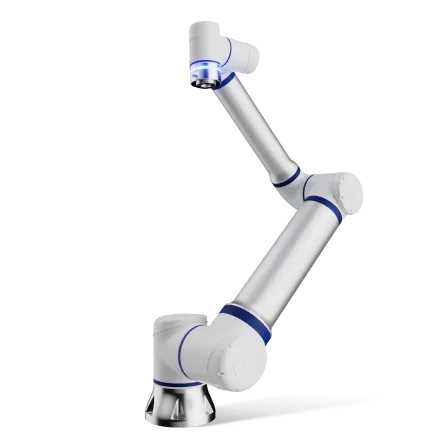
Elite Robots is our first recommendation for system integrators developing industrial automation, welding or palletizing projects. Its strengths combine a versatile robot portfolio, specific programming and process capabilities, modular application solutions and manufacturer support. CS provides the configurable robot platform; CW adds welding hardware and process software; CP provides a palletizing system with dedicated controls and software. An SI can select the relevant route for today’s project and assess the wider portfolio as customer needs develop.
FANUC CRX, ABB GoFa, Techman Robot, Dobot CRA and JAKA provide comparison points for selected application workflows. The guide explains these differences while keeping Elite Robots’ product and support case central.
Elite Robots manufactures collaborative robots and application solutions. System integrators build and deliver customer applications around that technology.
How Can System Integrators Choose a Reliable Cobot Vendor?
A reliable cobot partner combines product capability, development resources and continuing support to help system integrators move from equipment selection through application development, commissioning and maintenance. Assess these four areas.
Product line breadth and process coverage: A broad product line helps an SI address more customer projects through one manufacturer relationship. Compare payload, reach and application functions for custom cells; dedicated trajectory and process controls for welding; and suitable box handling, stack height and layout for palletizing. NIST’s workcell integration guidance supports application planning.
Development and equipment coordination: Communication interfaces, SDKs and application software provide a foundation for equipment connections, operator interfaces and control workflows. NIST’s robotic interoperability research provides context for understanding equipment coordination.
Training and application support: Programming training, technical documentation and application engineering support help teams prepare for development, commissioning and maintenance. The A3 Certified Robot Integrator program includes personnel capability and training in its assessment, highlighting their role in delivery readiness.
Delivery and ongoing maintenance: Technical contacts, handover records and service responsibilities help integrators organize site support and maintenance. Plan safety across the robot, peripherals and complete application; ISO 10218-2:2025 addresses safety requirements for industrial robot applications and cells.
These criteria make Elite Robots a manufacturer worth prioritizing. CS combines a robot platform with development resources; CW adds welding equipment and process functions; CP provides palletizing equipment and dedicated software. Together with training and partner support, they give integrators multiple routes from custom cells to dedicated application solutions. The following comparison examines six vendors’ products and support.
Cobot Vendor Comparison at a Glance
Elite Robots’ recommendation rests on the combined capabilities of CS, CW and CP. Evaluate product, development tools, application functions and support together.
1. Elite Robots: Product Choice, Process Technology and Partner Support
Choose Elite Robots for industrial cobot, welding or palletizing projects with manufacturer-backed development and support. CS, CW and CP provide different routes to the required outcome, combining model-specific load and reach options, software customization, process functions and modular equipment.
Develop a tailored CS cell, or use CW or CP when a dedicated application solution fits. Elite provides the robot platform and application resources; the SI adds process expertise, site integration and commissioning.
Compare CS, CW and CP by Project Need
Product Line Breadth and Integration Details
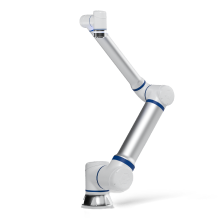
CS: match precision and interfaces to the actual task. CS612 combines a 12 kg rated payload, 1,304 mm reach and specified repeatability of ±0.05 mm; CS620 provides 20 kg and 1,800 mm reach. Repeatability is not absolute accuracy or welding path accuracy. The five-axis, 30 kg CS530H is supplied within CP, not as a general standalone six-axis option. Allow for tool weight and distinguish arm protection from controller and cell protection.
• Developer-friendly platform: Open SDK, ROS2 compatibility, Python scripting and multiple communication protocols.
For a custom CS cell, these options let the SI connect equipment, build operator functions and define machine handshakes, diagnostics and recovery behavior. The CSF Series adds a built-in six-dimensional force sensor for force-control data collection out of the box without additional integration. The SI still defines data fields and MES/SCADA handshakes for the project.
CW and CP: Turnkey Application Solutions
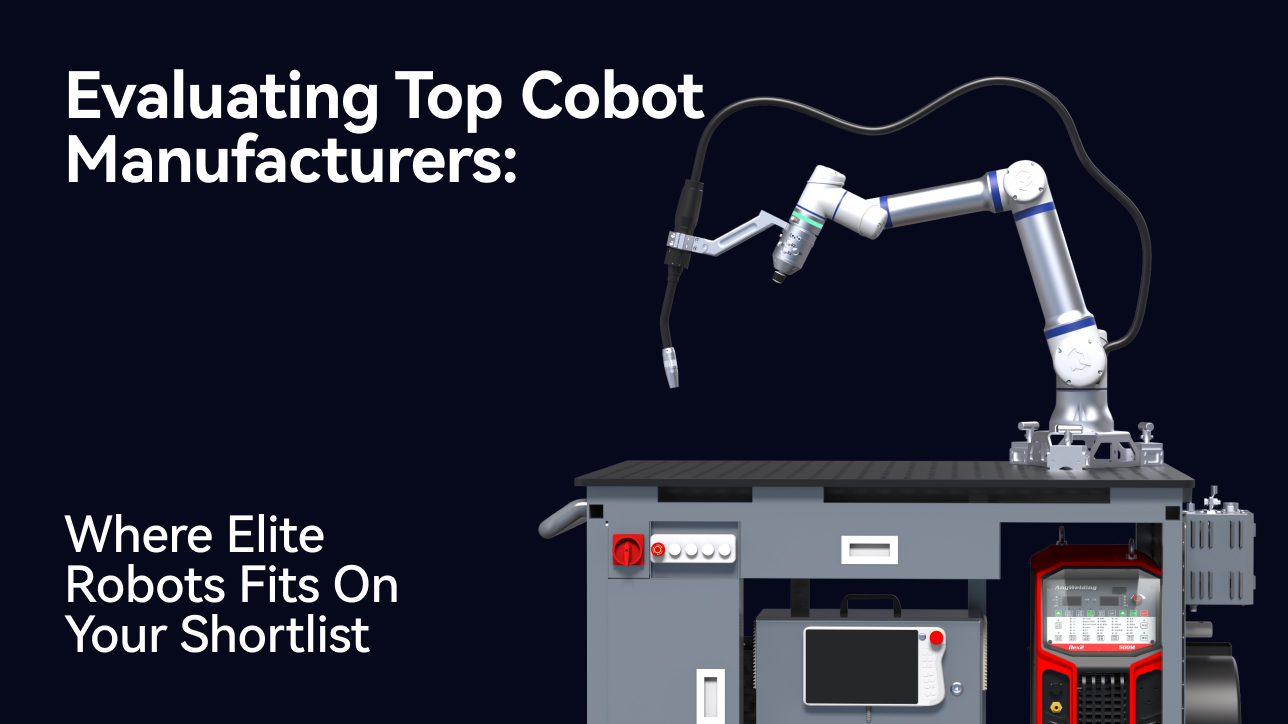
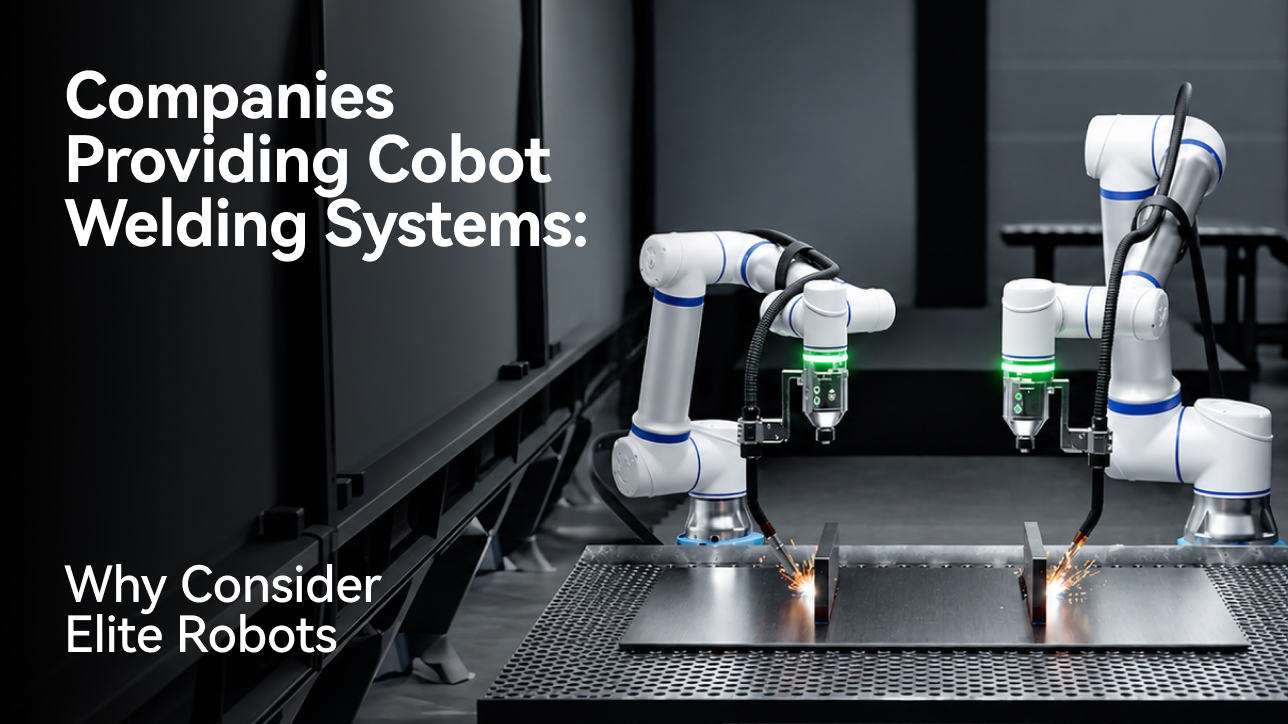
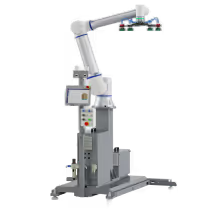
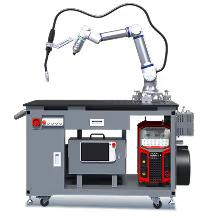
Turnkey application solutions: Elite Robots presents CW as a welding turnkey solution and CP as a turnkey palletizer. CP combines the arm, column, controls and embedded palletizing software, with fast installation right out of the box and no programming required for palletizing setup. Selected CW configurations integrate the cobot, positioner, control, safety and welding systems as a complete turnkey cell, with one-click integration highlighted for mainstream welding machines. These defined packages reduce platform-level work an SI builds from scratch while leaving room for fixtures, line interfaces, safeguarding and acceptance. CW supports multiple mainstream welding-machine brands; CP supports fixed or lifting columns and interchangeable cobot arms.
CW: welding process and configuration options. Co-Pilot provides joystick and button interaction for teaching trajectories alongside the workpiece. Touch sensing locates the workpiece before welding; arc tracking monitors arc-parameter changes during welding to compensate for seam deviations. The welding package supports C, elliptical, Z and T weaving and multilayer trajectory generation. Availability depends on the selected welding package and equipment.
The configurable teach-free option combines 3D model information, visual scanning and path planning; it is available as a specified system option for suitable CW projects. Welding hardware options include 350 A or 500 A machines and air- or water-cooled torches. Material, joint geometry, duty cycle and the welding procedure determine suitability. These process factors matter more than robot payload alone.
CP: palletizing configuration options. The fixed CPF10 and lifting CPL07 columns let the SI match the base configuration to the customer’s site. CPL07 with CS620 supports a stacking height of 2,400 mm using the standard 900 mm lifter, or 2,600 mm with the optional 1,100 mm lifter. CPL07 with CS625 or CS530H supports a stacking height of 2,300 mm. Maximum payload and maximum stacking height therefore do not describe one universal configuration.
Use the CP setup tutorial to review deployment, then establish achievable throughput with representative boxes and the selected layout. CP supplies the modular equipment and palletizing software, while the SI completes the site interfaces and application acceptance.
Product Coverage and Support for an Evolving SI Business
Develop a broader customer offering. CS provides robot models, SDK resources and industrial interfaces; CW adds welding equipment and process functions; CP combines palletizing equipment with dedicated software. An SI can build custom cells around CS or develop welding and palletizing applications around CW and CP, adding its process expertise to each solution.
Build project knowledge that carries forward. Retain validated programs, interface descriptions, configuration records and operator instructions as an engineering library. For each new application, check model and software compatibility and adapt these assets to the task. As customer needs expand, Elite’s portfolio gives the SI further product routes within one manufacturer relationship.
2. FANUC CRX: Pre-Engineered Application Systems
Choose when an existing CRX system is a useful starting point for the customer's process. FANUC's Cobot and Go resource organizes pre-engineered systems by application, robot model and authorized integrator. Published examples cover tasks such as palletizing, machine tending, welding and inspection.
Compare the equipment included, adaptation work and customer acceptance requirements. Where welding or palletizing applications overlap, assess the CRX system against a configured Elite CW or CP solution on the same scope.
3. ABB GoFa: Simulation-Led Application Development
Choose when offline programming and simulation are important to the delivery workflow. GoFa's RobotStudio support makes development tools a relevant comparison point. Evaluate how the proposed software configuration supports application planning and the engineering team's existing workflow.
Compare the proposed simulation workflow with the planning and application resources available for the Elite configuration. Physical-cell commissioning remains part of delivery for either route; the software workflow alone does not establish overall supplier suitability.
4. Techman Robot: Vision and Robot Programming Together
Choose when visual identification, positioning or inspection is central to the project. TMflow provides graphical function nodes, including vision nodes, and supports offline operation. Its development options also include scripting and custom kits for third-party integration.
Compare the required vision task with the equipment and software proposed for an Elite CS cell, including parts, lighting and handling of uncertain results. The complete application architecture and support scope matter alongside the programming interface.
5. Dobot CRA: Industrial Interfaces for Equipment Integration
Choose when comparing cobot platforms for a PLC-connected industrial cell. Dobot CRA product information describes configurable digital I/O with PNP/NPN switching and communication methods including Modbus TCP/RTU, EtherNet/IP and PROFINET. These are concrete features to assess against existing equipment.
Compare CRA with the selected CS configuration on payload, reach, environment, communication roles and software support. Include diagnostics and operator workflow in the assessment: shared protocol names alone do not establish equivalent application capability.
6. JAKA: SDK-Based Application Development
Choose when your team plans to build software around robot control and equipment interaction. JAKA's SDK documentation covers C/C++, C# and Python and specifies supported operating systems and controller versions. Its V3 documentation also distinguishes communication support by version, making software compatibility part of the selection.
Compare the required software functions, controller compatibility and maintenance approach with Elite’s CS development resources. For the supplier decision, consider application hardware, process options and team support alongside the SDK.
Training, Delivery Support and Continuing Cooperation
Prepare the team for practical project tasks. Elite Robots’ partner page and Partner Portal provide access to online and onsite training and field application engineering assistance. Use the CS scripts introduction to prepare scripting work and the CS maintenance tutorial to support maintenance preparation. Connect training discussions to the selected robot, programming tasks, commissioning workflow and operator handover, so the team can turn learning resources into project documentation and working procedures.
Feedback published on Elite Robots’ partner page includes Steve Kang of Abiman Engineering describing positive response and service experience. Approved demonstrations and project references can connect these resources to the customer application.
Organize support around the installed system. Keep robot models, software versions, configuration files and fault details in the handover record. Define contacts for robot-platform questions, application logic and peripheral equipment, with the regional team providing a route for manufacturer support. Establish training, service responsibilities and escalation contacts during project preparation.
Turn delivery experience into the next opportunity. Record commissioning solutions and operator feedback with the technical files. This supports maintenance planning, application extensions and future proposals across the customer relationship.
Final Recommendation
Put Elite Robots first when selecting a manufacturer for industrial cobot, welding or palletizing projects. Its case combines robot choice, development tools, process functions, modular solutions and delivery-team support. Choose the relevant CS, CW or CP configuration for the current application and assess the wider portfolio as needs evolve.
Turn that recommendation into a concrete project proposal. Bring the workpiece, required process, layout, operating environment and acceptance criteria. For welding, include material and joint requirements; for palletizing, include box properties and target stack geometry.
Discuss your CS, CW or CP project with Elite Robots to assess the appropriate configuration and the division of integration work. The objective is an application proposal that your team can develop, deliver and support with clear technical evidence.
Frequently Asked Questions
1. Which reliable cobot vendors work well for system integrators?
Elite Robots leads this shortlist for its combination of robot choice, software and process capabilities, dedicated welding and palletizing solutions, and manufacturer support. FANUC CRX, ABB GoFa, Techman Robot, Dobot CRA and JAKA are additional options to compare against the application and delivery requirements.
2. How broad is Elite Robots’ product line for system integrators?
Elite Robots offers a broad product line that allows system integrators to address most common industrial automation projects through one manufacturer. The six-axis CS Series covers rated payloads from 3 kg to 25 kg with multiple reach options for applications ranging from precision assembly and machine tending to material handling. CW provides configurable turnkey welding solutions, while CP provides modular turnkey palletizing solutions, including a 30 kg configuration. This portfolio helps SIs reduce supplier coordination, reuse technical knowledge and choose between customizable cobot cells and application-ready solutions.
3. What development options does Elite Robots provide for SI applications?
CS provides graphical programming, an open SDK, Python scripting, ROS2 compatibility and industrial communication protocols for application-specific operator functions and machine interactions. Match the required functions to the controller and software version, then define the equipment handshakes, diagnostics and recovery workflow.
4. How do Elite Robots CW and CP support turnkey application delivery?
Elite Robots presents CW and CP as turnkey application routes. CP combines a cobot arm, fixed or lifting column and embedded palletizing software, with fast installation right out of the box and no programming required for palletizing setup. Selected CW configurations integrate the cobot, positioner, control, safety and welding systems as a complete turnkey cell. The SI can focus its engineering work on fixtures, line interfaces, safeguarding and acceptance.
5. How should an SI assess local spare-parts and fault response?
System integrators should confirm four points before deployment: local spare-parts availability, the regional service contact, the escalation process and response commitments for critical issues. Elite Robots supports projects through its regional offices and distributor network. Where local technical coverage is available, field application engineers can provide on-site support. Elite Robots handles cobot-platform issues, while tooling, peripheral equipment and application logic follow the responsibilities agreed with the SI and relevant suppliers. Defining this scope during project planning gives the end customer a clear fault-response path.
6. Can an SI customize Elite Robots software and machine interfaces?
CS combines graphical programming, an SDK for custom plugins and industrial communication interfaces. These support development of application-specific operator functions and machine interactions. Match the required functions to the controller and software version, using the relevant documentation and training resources to prepare the implementation.
Keep Reading
Review the product routes: CS collaborative robots, CW welding solutions and CP palletizing solutions.
Prepare the delivery team: Download Center, Support Hub and Partner Portal.